
Latest reads: Tech, being human, the hobbit
Latest read alouds with my 6 & 8 year old boys, and books I'm reading, too.

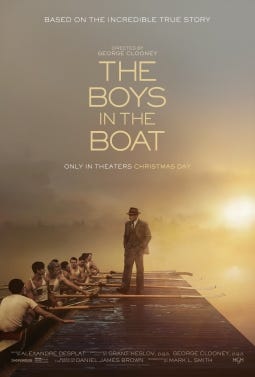
“It was when he tried to talk about 'the boat' that his words began to falter and tears welled up in his eyes...Finally, watching Joe struggle for composure over and over, I realized that 'the boat' was something more than just the shell or its crew. To Joe, it encompassed but transcended both - it was something mysterious and almost beyond definition. It was a shared experience - a singular thing that had unfolded in a golden sliver of time long gone, when nine good-hearted young men strove together, pulled together as one, gave everything they had for one another, bound together forever by pride and respect and love. Joe was crying, at least in part, for the loss of that vanished moment but much more, I think, for the sheer beauty of it.” — The Boys in the Boat: Nine Americans and Their Epic Quest for Gold at the 1936 Berlin Olympics by Daniel James Brown
This was a heavy month for us, as we marked a whole year without my husband. But we got through due to everyone’s love around us - many meals and visits, trips to the mountains and the beach, fresh flowers - really, the beauty and kindness of people can be overwhelming. We have been reading, so I thought I’d share some snippets about that with you all, in leiu of a coherent essay.
We watched some winter Olympics this year, in bits and pieces. To be on theme, we read aloud the young reader’s edition of The Boys In the Boat, about Joe Rantz and his crew of ragtag boys from the West Coast who got gold in the 1936 Berlin Olympics for rowing. It was a tricky story to tell, I think, since the part that was most meaningful to the people involved was the hardest to describe in words. How do you describe in words what it means to be a part of something bigger than yourself, in sync with so many other people? Such an embodied experience sounds funny when you’re trying to talk about it (much harder than to wax eloquent about the beauty of mountains or trees). But I think the author did a really excellent job. I tend to hate team sports, but to hear rowing described, it sounded more like being in choir or in a theatre production - the beauty that comes from everyone working together, building something bigger than just one individual. Of course, we were also all on the edges of our seats to see what would happen in all the races. Did I cry when they won? Yes, of course. Also, SO fun reading good non-fiction aloud. In many ways it is more compelling than fiction sometimes, because it really happened, and there’s a magic in that for the kids.
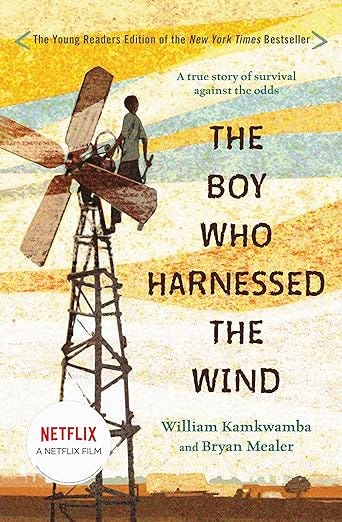
Our other nonfiction read-aloud was The Boy Who Harnessed The Wind by William Kamkwamba. Since we know people from Malawi, I think this made it more personal. The Young Reader’s edition did a great job building up the terror and sadness of the famine in Malawi, without being too graphic. And we were all desperate for William to figure out how to build a windmill. Also- because it was a true story- it got my engineering child’s mind whirring with ideas. He loves “survival/ how can you sustain yourself independently” kind of stories like The Boxcar children, Swallows and Amazons, Enid Blyton’s The Secret Island, My Side of the Mountain … so this was fun because it was a boy figuring out electricity from scratch with no google, and just a junk yard next door. “Mom, why don’t we have a junk yard? It’s so unfair!”
Any recommendations for more young reader’s editions of compelling nonfiction?? My boys are loving it.
We read The Hobbit - for the second time in a 2 year period, and I’d say the boys enjoyed it even more this time. But it’s surprisingly shallow, amiright? My brain just naturally tries to pull meaning from whatever I’m reading to the kids, but clearly I need some Tolkien scholar to tell me what’s going on in the Hobbit beyond just a jolly story. No one is exceptionally heroic. (Except the Bard at the end and he’s hardly a character, just a kind of cardboard cut-out from an epic poem). The dwarves are honestly just too obsessed with gold. Do we even want them to find it?? Bilbo comes through, well done Bilbo, we like him. I suppose it’s all summed up in that final line that if we were all like hobbits and enjoyed our food and song and fires more than hoarded gold it would be a merrier world — but seems an odd punchline to this long, involved adventure. Tolkien scholars, enlighten me.
I read some of A Praying Life by Paul Miller (on the recommendation of my friendVal, who has a delightful newsletter for homeschooling parents looking for help with teaching writing, or living abroad). It has been really refreshing! The tone is so warm, and so far it’s answering all my questions about prayer (what’s the point?!) and is actually helping me pray more.
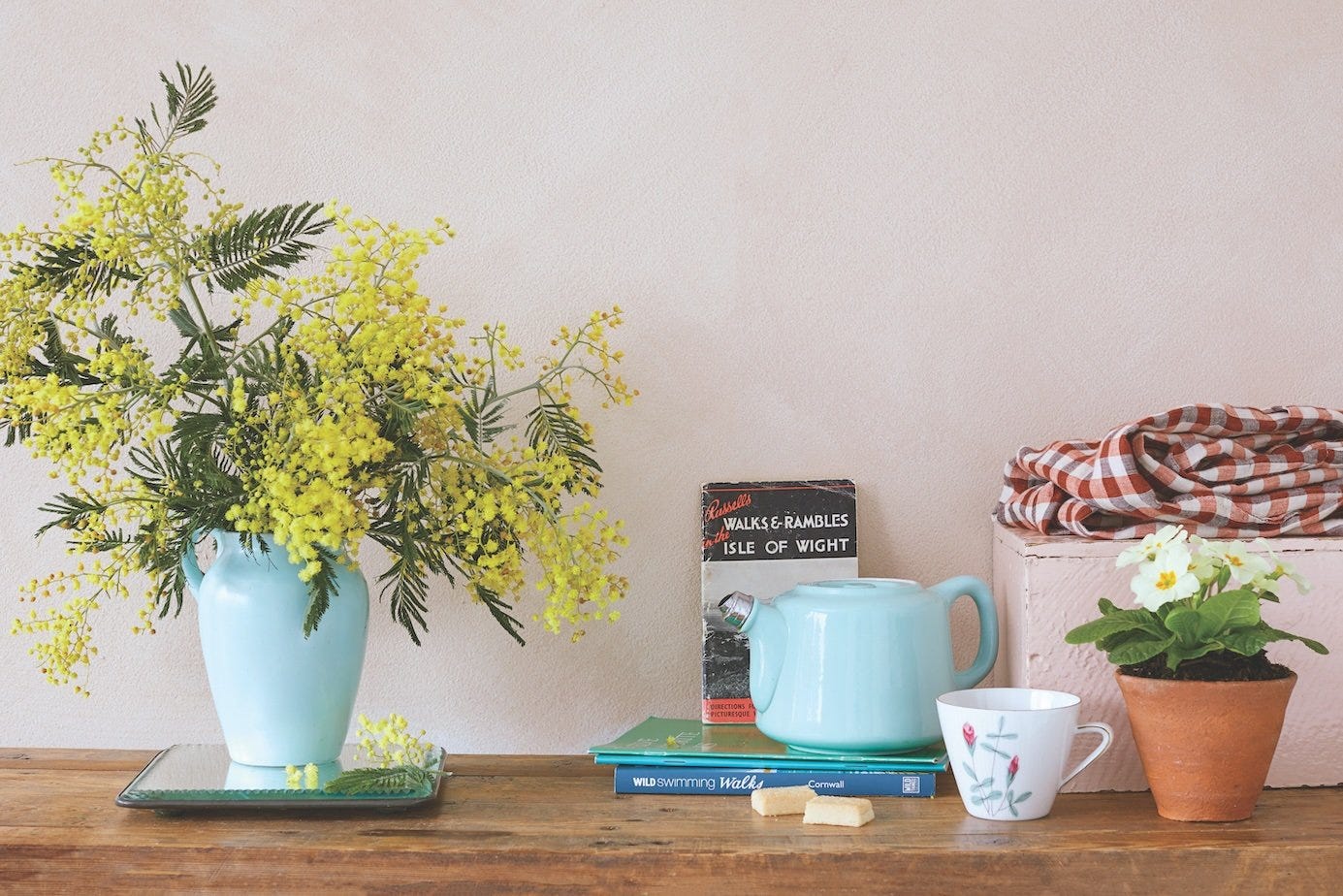
I’ve been enjoying Victoria Magazine and Simple Things magazine on my kindle. Sometimes you just want to look at pretty, peaceful things.
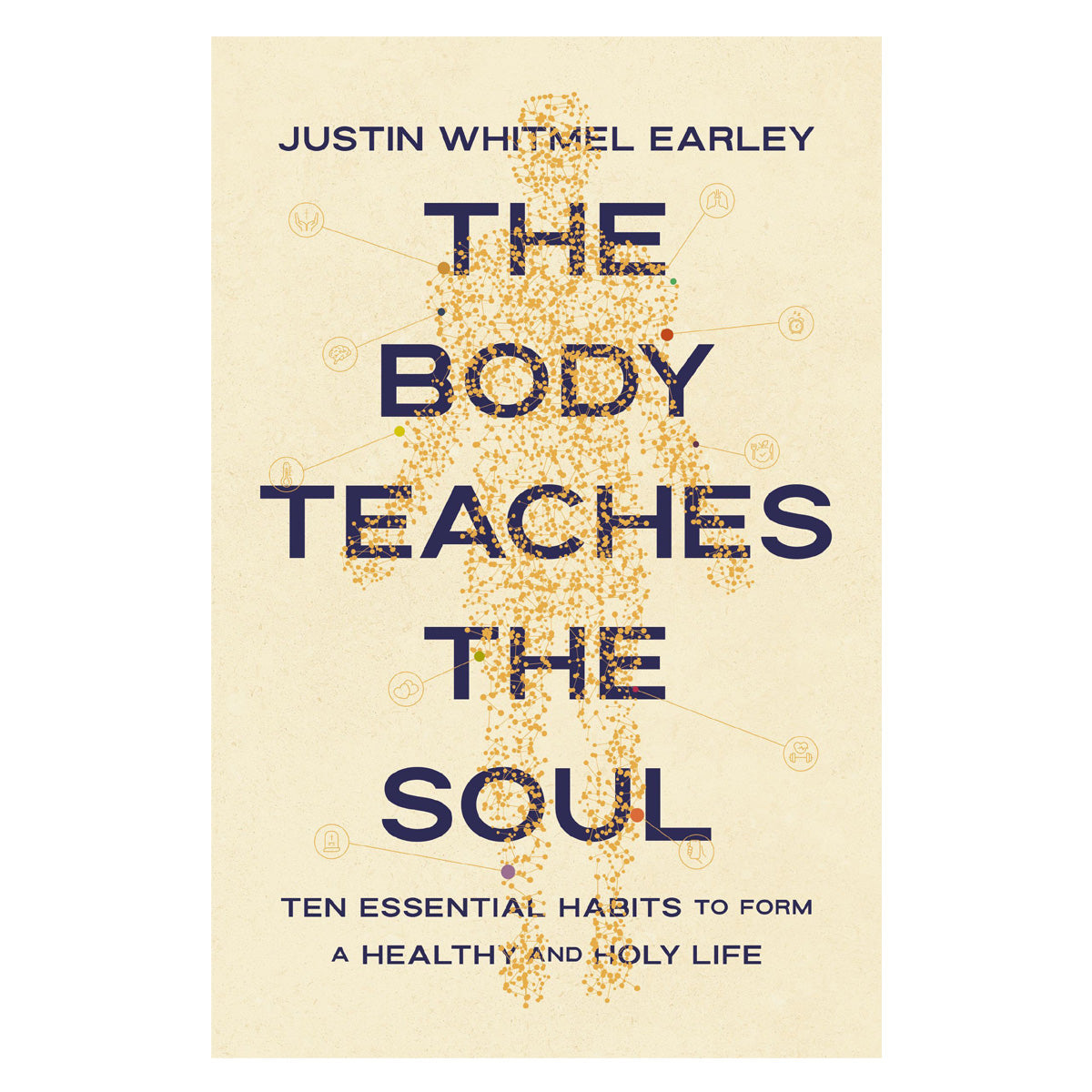
In book club we finished The Body Teaches the Soul by Justin Whitmel Early. I’ve read his Habits of the Household book and thought it was good, but this one was even better. It felt more approachable, and it was a good combination of scientific research, Christian tradition and theology, scripture, and his own story. He also made it super practical with quick summaries at the end. In tandem with that, I finished The Anxious Generation by Jonathan Haidt and really, this all just makes you want to figure out how to cut more technology out of your life. I mean, for the children, yes, but more for myself! I listened to pieces of The World Beyond Your Head by Matthew B. Crawford, as it was one of the ones mentioned in passing in The Body Teaches the Soul. Let me just say one should not try and “read” philosophy on audio while nursing in various snatches throughout the day. I just wanted a physical book to follow the train of thought. BUT. The snatches I got were very interesting - all about how our attention is being stolen and fracturing our sense of self, and competence in the physical world as an antidote. (From the publisher: “We often complain about our fractured mental lives and feel beset by outside forces that destroy our focus and disrupt our peace of mind. Any defense against this, Crawford argues, requires that we reckon with the way attention sculpts the self. Crawford investigates the intense focus of ice hockey players and short-order chefs, the quasi-autistic behavior of gambling addicts, the familiar hassles of daily life, and the deep, slow craft of building pipe organs. He shows that our current crisis of attention is only superficially the result of digital technology, and becomes more comprehensible when understood as the coming to fruition of certain assumptions at the root of Western culture that are profoundly at odds with human nature”)
There seems to be these twin streams of writing that I end up swimming in - on the one hand, there’s a stream of writing about disconnection, distraction, and how technology (especially smartphones, but now also AI) is controlled by Big Capitalism and disintegrates society by preying on our lowest impulses to fuel our addiction. And on the other hand, there’s a stream of writing that is asking “What does it mean to be human in the midst of all of this tech?” “What does it mean to have a body?” “How can we become more embodied, connected, and focussed?” “How can we become more human?”
This article from Mere Orthodoxy about living with AI was extremely interesting. (Life With Machines by Ian Harbor) I think I’m interested in this partly because I was married to a data scientist who used AI for coding from quite early on. I liked how this article differentiated from AI that is making technology more efficient, and large language models that basically just exist to make college students lazy. As we think about education, and what education is FOR, especially in the age of AI, people who are thinking about this interest me. “Our economy could be radically upended. But we should be asking why we want humans doing the work of machines in the first place. Let the machines do machine work so the humans can do human work. Relating, creating, building, molding, sculpting, rearranging, and contemplating. That, I think, is the role of the Preservationist. Preserve the Good, True, and Beautiful".
Also in the tech and data science stream - I loved this article about how metrics make us miserable!

Again and again I find myself so thankful for my liberal arts education that forced me to take math and technology classes as well as philosophy and history and religion and poetry. A machine can churn out metrics and numbers for us, but more than ever we need data scientists who have been trained to ask questions about meaning to keep us from stupidly following metrics. Also, as someone who has done some monitoring and evaluation in the nonprofit space - this question of metrics and meaning was a huge challenge. A few quotes:
“Or in education, one of the things that I’ve become really obsessed with is this gap between wanting to educate students for wisdom, curiosity, and reflectiveness, and then the institution coming to be focused on a few easy measurables, like speed of graduation and starting salary…”
“I think there’s a particular kind of quality or character to what’s easy to metrify. Maybe you have examples of this from economics, but an example I think about a lot is in health policy is saturated fat and correlations to lifespan and heart attack rate.
And then there’s the other stuff like the deliciousness of brie, the joy of a perfectly ripe cheese, the tradition involved, the happiness of it. And these are much harder to quantify. My claim isn’t that lifespan and heart attack rates are unimportant. It’s that this other stuff tends to not be weighted at all in large scale social conversations, because it’s hard to measure.”
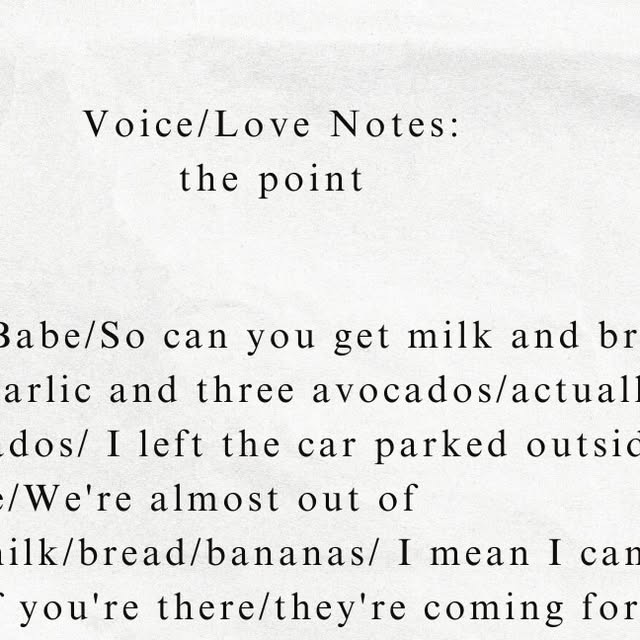
And last, but not least, here’s some “Found Poetry” I made using voicenotes from my husband and my conversations. Swipe over, as it is two slides. 💜
Love the way you keep reading / thinking / conversing. Would be lovely to chat about all this over coffee / wine / water with lemon....
Not me swallowing a little gulp at the poetry. Steph. I'm so sorry for such a loss. I'm so glad you have the voice notes.